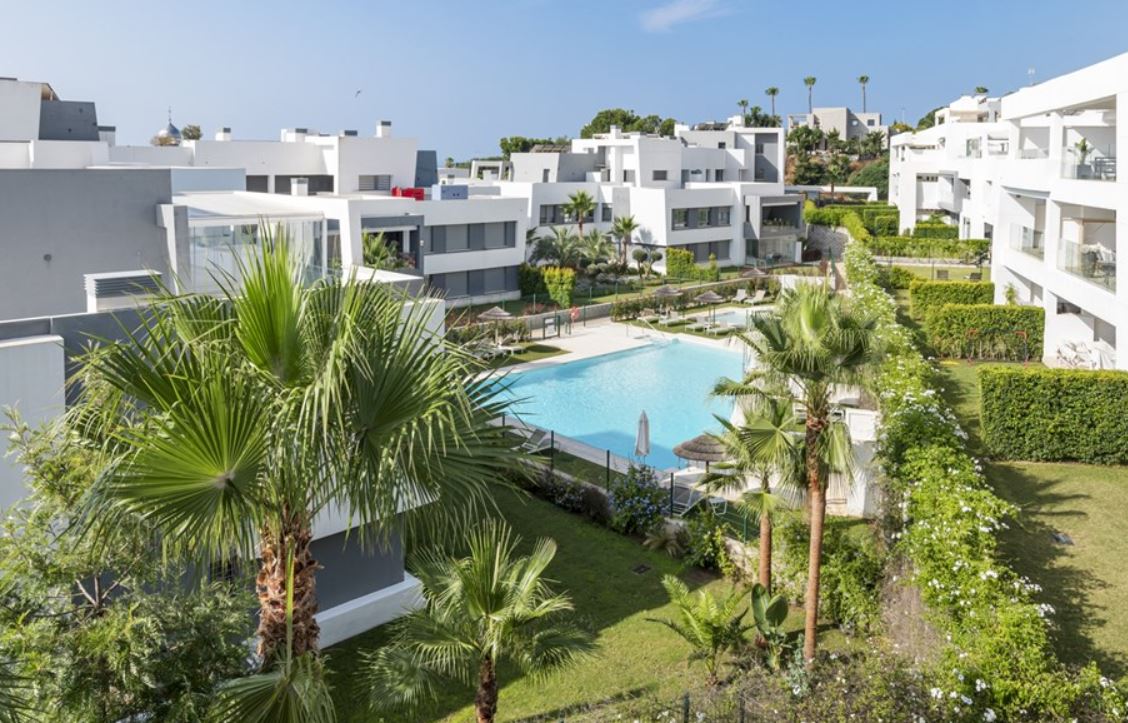
Welcome to this elegant two-bedroom, two-bathroom apartment located in the exclusive Oceana Gardens residential complex in Cancelada, at the very center of the highly desirable New Golden Mile between Marbella and Estepona. This stylish, contemporary home is designed to maximize indoor-outdoor living and boasts breathtaking open views of the Mediterranean Sea and the surrounding mountains, creating an ideal atmosphere for relaxation, social gatherings, and unforgettable sunsets.
The apartment features a bright and spacious open-plan living and dining area that flows naturally onto the exterior space. Sold fully furnished, the property is completely turnkey and ready for immediate enjoyment. The modern kitchen comes fully fitted with top-quality appliances, while both bedrooms offer built-in wardrobes and refined, stylish bathrooms.
Additional conveniences include an underground parking space and a private storage room, providing comfort, security, and practicality. Residents of Oceana Gardens can enjoy a beautifully maintained communal swimming pool and a fully equipped on-site gym. Owners also benefit from access to a nearby exclusive sports club, which offers exceptional amenities such as a restaurant, indoor heated pool, state-of-the-art fitness facilities, a luxury spa, and a wellness area—perfect for those seeking an active and healthy lifestyle.
The location is truly exceptional, just 2.5 km from the golden beaches of the Costa del Sol, renowned for their charming chiringuitos and fashionable beach clubs. Marbella and Estepona are both only a 10-minute drive away, making this property an excellent choice as a holiday home, permanent residence, or smart investment opportunity on the Costa del Sol.
Characteristics
- Air conditioning
- Balcony
- Brand new
- Close to children playground
- Close to golf
- Close to schools
- Close to shops
- Communal Garage
- Communal Pool
- Country view
- Electric blinds
- Excellent condition
- Fitted wardrobes
- Fully fitted kitchen
- Fully furnished
- Gated community
- Gym
- Indoor pool
- Lift
- Mountain view
- Open plan kitchen
- Panoramic view
- Parking included
- Private Garden
- Private terrace
- Sauna
- Sea view
- Security entrance
- Security shutters
- SPA
- Storage room
- Surveillance cameras
- Transport near
- Uncovered terrace
- Video entrance
- Walk-in closet
Annual taxes & community costs
- IBI: 469 euros
- Community fees: 211 euros
Proximities in Estepona

- San José School Guadalmina: 16 Km
- Atalaya International College: 19 Km

- Hospiten Estepona: 9 Km
- Hospital de Alta Resolución de Estepona (Public): 11 Km

- Puerto Banús: 22 Km
- Sotogrande: 30 Km
- Marbella: 32 Km
- Gibraltar: 48 Km
- Málaga: 91 Km

- San José School Estepona: 3 Km
8 Reasons to Buy a Home in Estepona in 2026
Lifestyle, Investment, and Quality on the Costa del Sol If you're considering buying a home on Spain’s Costa del Sol, Marbella has likely already caught your attention. However, there’s another town that is quietly becoming one of the most solid and attractive real estate markets in s outhern Spain: Estepona . With steady growth, major urban transformation, and a perfect balance between modern luxury and authentic Andalusian charm, Estepona offers something few destinations can deliver — genuine quality of life combined with strong appreciation potential. From our real estate agency on the Costa del Sol here are 8 reasons why buying a home in Estepona could be one of the smartest personal and financial decisions you make this year. 1. A Historic Old Town That Captivates from the First Walk Estepona is known as “ The Garden of the Costa del Sol ,” and a stroll through its historic center makes it easy to see why. Immaculate whitewashed streets, balconies overflowing with geraniums, charming plazas, and quiet corners where life moves at a slower pace. Landmarks such as Plaza de las Flores, the Church of Santa María de los Remedios, and the San Luis Castle add character and authenticity. Unlike more saturated destinations, Estepona has revitalized its old town without losing its soul . Living here means having authentic Andalusian culture right outside your door. .klarium-cta-box { display: flex; align-items: stretch; max-width: 860px; margin: 40px auto; border: 1px solid #e0dbd3; overflow: hidden; font-family: 'Nunito Sans', sans-serif; } .klarium-cta-img { flex: 0 0 40%; min-height: 240px; background-size: cover; background-position: center; } .klarium-cta-body { flex: 1; background: #f7f5f2; padding: 36px 40px; display: flex; flex-direction: column; justify-content: center; } .klarium-cta-label { font-size: 0.75rem; font-weight: 600; letter-spacing: 0.12em; text-transform: uppercase; color: #8E424C; margin: 0 0 10px 0; } .klarium-cta-title { font-family: 'Nunito Sans', sans-serif; font-size: 1.35rem; font-weight: 700; color: #1a1a1a; margin: 0 0 12px 0; line-height: 1.3; } .klarium-cta-text { font-size: 0.9rem; font-weight: 300; color: #4a4a4a; line-height: 1.7; margin: 0 0 24px 0; } .klarium-cta-btn { display: inline-block; background: #8E424C; color: #ffffff; text-decoration: none; font-size: 0.75rem; font-weight: 700; letter-spacing: 0.12em; text-transform: uppercase; padding: 13px 28px; align-self: flex-start; transition: background 0.3s ease; } .klarium-cta-btn:hover { background: #1a1a1a; color: #ffffff; text-decoration: none; } @media (max-width: 640px) { .klarium-cta-box { flex-direction: column; } .klarium-cta-img { flex: none; width: 100%; min-height: 200px; } .klarium-cta-body { padding: 28px 24px; } .klarium-cta-title { font-size: 1.15rem; } } Estepona · Costa del Sol Invest in Estepona, the rising gem of Costa del Sol Discover our selection of rented apartments in Estepona. Properties with tenants in place, active lease contracts, and rental income from day one. View opportunities 2. 13 Miles of Beaches to Enjoy Year-Round Owning a home in Estepona means making the Mediterranean part of your everyday life. The town boasts 17 beaches stretching across 13 miles of coastline. From the popular Playa de la Rada near the town center to quieter areas along the New Golden Mile, there are options for every lifestyle. Many properties are within walking distance of the beach — a feature that not only enhances quality of life but also significantly increases rental and resale appeal. .klarium-cta-box { display: flex; align-items: stretch; max-width: 860px; margin: 40px auto; border: 1px solid #e0dbd3; overflow: hidden; font-family: 'Nunito Sans', sans-serif; } .klarium-cta-img { flex: 0 0 40%; min-height: 240px; background-size: cover; background-position: center; } .klarium-cta-body { flex: 1; background: #f7f5f2; padding: 36px 40px; display: flex; flex-direction: column; justify-content: center; } .klarium-cta-label { font-size: 0.75rem; font-weight: 600; letter-spacing: 0.12em; text-transform: uppercase; color: #8E424C; margin: 0 0 10px 0; } .klarium-cta-title { font-family: 'Nunito Sans', sans-serif; font-size: 1.35rem; font-weight: 700; color: #1a1a1a; margin: 0 0 12px 0; line-height: 1.3; } .klarium-cta-text { font-size: 0.9rem; font-weight: 300; color: #4a4a4a; line-height: 1.7; margin: 0 0 24px 0; } .klarium-cta-btn { display: inline-block; background: #8E424C; color: #ffffff; text-decoration: none; font-size: 0.75rem; font-weight: 700; letter-spacing: 0.12em; text-transform: uppercase; padding: 13px 28px; align-self: flex-start; transition: background 0.3s ease; } .klarium-cta-btn:hover { background: #1a1a1a; color: #ffffff; text-decoration: none; } @media (max-width: 640px) { .klarium-cta-box { flex-direction: column; } .klarium-cta-img { flex: none; width: 100%; min-height: 200px; } .klarium-cta-body { padding: 28px 24px; } .klarium-cta-title { font-size: 1.15rem; } } Villas · Estepona Luxury villas in Estepona with premium investment potential Discover our exclusive selection of luxury villas in Estepona. Premium properties designed for discerning investors seeking high-value assets with strong rental demand and appreciation potential. View villas 3. Mediterranean Climate and a Healthier Lifestyle With over 320 days of sunshine per year and mild winters , Estepona allows residents to enjoy outdoor living almost year-round. Life here happens on terraces, seaside promenades, and golf courses. The climate encourages physical activity, well-being, and a more relaxed daily rhythm. For international buyers, this is a key factor: it’s not just about purchasing a property — it’s about upgrading your lifestyle. 4. Exclusive Residential Areas with Strong Growth Potential The coastal stretch connecting San Pedro to Estepona — known as the New Golden Mile — has become one of the most desirable areas for luxury residential development. In East Estepona, sought-after areas include: Los Flamingos Golf El Paraíso Bel-Air Cancelada In West Estepona, communities such as Valle Romano, Estepona Golf, and contemporary beachfront developments offer high-end properties with strong appreciation potential. The combination of privacy, modern design, and well-planned surroundings makes these areas ideal for both primary residences and investment properties. .klarium-cta-box { display: flex; align-items: stretch; max-width: 860px; margin: 40px auto; border: 1px solid #e0dbd3; overflow: hidden; font-family: 'Nunito Sans', sans-serif; } .klarium-cta-img { flex: 0 0 40%; min-height: 240px; background-size: cover; background-position: center; } .klarium-cta-body { flex: 1; background: #f7f5f2; padding: 36px 40px; display: flex; flex-direction: column; justify-content: center; } .klarium-cta-label { font-size: 0.75rem; font-weight: 600; letter-spacing: 0.12em; text-transform: uppercase; color: #8E424C; margin: 0 0 10px 0; } .klarium-cta-title { font-family: 'Nunito Sans', sans-serif; font-size: 1.35rem; font-weight: 700; color: #1a1a1a; margin: 0 0 12px 0; line-height: 1.3; } .klarium-cta-text { font-size: 0.9rem; font-weight: 300; color: #4a4a4a; line-height: 1.7; margin: 0 0 24px 0; } .klarium-cta-btn { display: inline-block; background: #8E424C; color: #ffffff; text-decoration: none; font-size: 0.75rem; font-weight: 700; letter-spacing: 0.12em; text-transform: uppercase; padding: 13px 28px; align-self: flex-start; transition: background 0.3s ease; } .klarium-cta-btn:hover { background: #1a1a1a; color: #ffffff; text-decoration: none; } @media (max-width: 640px) { .klarium-cta-box { flex-direction: column; } .klarium-cta-img { flex: none; width: 100%; min-height: 200px; } .klarium-cta-body { padding: 28px 24px; } .klarium-cta-title { font-size: 1.15rem; } } Apartments · Estepona Modern apartments in Estepona with guaranteed returns Explore our curated collection of modern apartments in Estepona. Each property features professional management, verified tenants, and consistent monthly rental income. Explore apartments 5. Urban Transformation and High-Impact Development Projects Estepona isn’t just growing — it’s evolving strategically. The town has invested heavily in infrastructure, public spaces, and urban renewal. Projects such as the new San Lorenzo Boulevard will strengthen the connection between the town center and the waterfront, adding pedestrian zones, commercial spaces, and underground parking. In addition, large-scale cultural and entertainment initiatives are placing Estepona firmly on the international map , boosting the local economy and reinforcing the real estate market. Consistent public investment is one of the main drivers behind Estepona’s long-term stability and growth outlook. @import url('https://fonts.googleapis.com/css2?family=Cormorant+Garamond:ital,wght@0,400;0,600;1,400;1,600&family=Montserrat:wght@300;400;500&display=swap'); .cta-block { border: 1px solid #e0ddd8; border-radius: 10px; padding: 2rem 2.5rem; background: #fff; display: flex; flex-direction: column; gap: 1rem; max-width: 720px; margin: 2rem 0; position: relative; overflow: hidden; } .cta-block::before { content: ''; position: absolute; top: 0; left: 0; width: 4px; height: 100%; background: #8E424C; } .cta-eyebrow { font-family: 'Montserrat', sans-serif; font-size: 10px; font-weight: 500; letter-spacing: 0.18em; text-transform: uppercase; color: #8E424C; } .cta-title { font-family: 'Cormorant Garamond', Georgia, serif; font-size: 26px; font-weight: 600; line-height: 1.3; color: #1a1a1a; margin: 0; } .cta-title em { font-style: italic; color: #8E424C; font-weight: 600; } .cta-desc { font-family: 'Montserrat', sans-serif; font-size: 13px; font-weight: 300; color: #666; line-height: 1.6; margin: 0; } .cta-btn { display: inline-flex; align-items: center; gap: 10px; margin-top: 0.5rem; font-family: 'Montserrat', sans-serif; font-size: 11px; font-weight: 500; letter-spacing: 0.12em; text-transform: uppercase; color: #fff; background: #8E424C; padding: 12px 24px; border-radius: 2px; text-decoration: none; width: fit-content; } You might also like Looking for the best addresses in Marbella? 7 luxury developments worth knowing Estepona has its charm, but Marbella remains the benchmark for luxury living on the Costa del Sol. Discover the seven most sought-after residential developments in the area right now. Read the article → 6. Luxury Hotels and Premium Services Elevating Property Values The arrival of five-star resorts and high-end hotels has reinforced Estepona’s image as a luxury destination. These establishments attract affluent tourism, create employment opportunities, and increase demand for second homes. In real estate terms, this typically translates into rising property values and further consolidation of the luxury segment. .klarium-cta-box { display: flex; align-items: stretch; max-width: 860px; margin: 40px auto; border: 1px solid #e0dbd3; overflow: hidden; font-family: 'Nunito Sans', sans-serif; } .klarium-cta-img { flex: 0 0 40%; min-height: 240px; background-size: cover; background-position: center; } .klarium-cta-body { flex: 1; background: #f7f5f2; padding: 36px 40px; display: flex; flex-direction: column; justify-content: center; } .klarium-cta-label { font-size: 0.75rem; font-weight: 600; letter-spacing: 0.12em; text-transform: uppercase; color: #8E424C; margin: 0 0 10px 0; } .klarium-cta-title { font-family: 'Nunito Sans', sans-serif; font-size: 1.35rem; font-weight: 700; color: #1a1a1a; margin: 0 0 12px 0; line-height: 1.3; } .klarium-cta-text { font-size: 0.9rem; font-weight: 300; color: #4a4a4a; line-height: 1.7; margin: 0 0 24px 0; } .klarium-cta-btn { display: inline-block; background: #8E424C; color: #ffffff; text-decoration: none; font-size: 0.75rem; font-weight: 700; letter-spacing: 0.12em; text-transform: uppercase; padding: 13px 28px; align-self: flex-start; transition: background 0.3s ease; } .klarium-cta-btn:hover { background: #1a1a1a; color: #ffffff; text-decoration: none; } @media (max-width: 640px) { .klarium-cta-box { flex-direction: column; } .klarium-cta-img { flex: none; width: 100%; min-height: 200px; } .klarium-cta-body { padding: 28px 24px; } .klarium-cta-title { font-size: 1.15rem; } } Estepona · Costa del Sol Invest in Estepona, the rising gem of Costa del Sol Discover our selection of rented apartments in Estepona. Properties with tenants in place, active lease contracts, and rental income from day one. View opportunities 7. A Strong Real Estate Market with Appreciation Potential Estepona’s property market continues to show consistent demand from both domestic and international buyers. Key indicators include: Sustained sales growth High demand for both short-term vacation rentals and long-term leases Limited prime land availability Continuous new development projects Compared to Marbella, property prices remain more competitive, offering greater room for mid- and long-term appreciation. Many investors see Estepona as being in an active growth phase — making it a strategic entry point into the Costa del Sol market. Klarium Living: Our real estate agency on the Costa del Sol can help you with this process. 8. The Perfect Balance Between Tranquility and Connectivity One of Estepona’s greatest strengths is its atmosphere. Although it is just 20–30 minutes from Marbella and well connected to Málaga International Airport and Gibraltar, the pace of life here is noticeably different — calmer, more residential, more authentic. It’s ideal for those who want access to Marbella’s glamour without living in the middle of it. That balance — connectivity combined with peace — is rare among coastal destinations. Frequently Asked Questions About Buying Property in Estepona .klarium-cta-box { display: flex; align-items: stretch; max-width: 860px; margin: 40px auto; border: 1px solid #e0dbd3; overflow: hidden; font-family: 'Nunito Sans', sans-serif; } .klarium-cta-img { flex: 0 0 40%; min-height: 240px; background: #1a1a1a; display: flex; align-items: center; justify-content: center; padding: 40px; } .klarium-cta-img img { width: 100%; max-width: 200px; } .klarium-cta-body { flex: 1; background: #f7f5f2; padding: 36px 40px; display: flex; flex-direction: column; justify-content: center; } .klarium-cta-label { font-size: 0.75rem; font-weight: 600; letter-spacing: 0.12em; text-transform: uppercase; color: #8E424C; margin: 0 0 10px 0; } .klarium-cta-title { font-family: 'Nunito Sans', sans-serif; font-size: 1.35rem; font-weight: 700; color: #1a1a1a; margin: 0 0 12px 0; line-height: 1.3; } .klarium-cta-text { font-size: 0.9rem; font-weight: 300; color: #4a4a4a; line-height: 1.7; margin: 0 0 24px 0; } .klarium-cta-btn { display: inline-block; background: #8E424C; color: #ffffff; text-decoration: none; font-size: 0.75rem; font-weight: 700; letter-spacing: 0.12em; text-transform: uppercase; padding: 13px 28px; align-self: flex-start; transition: background 0.3s ease; } .klarium-cta-btn:hover { background: #1a1a1a; color: #ffffff; text-decoration: none; } @media (max-width: 640px) { .klarium-cta-box { flex-direction: column; } .klarium-cta-img { flex: none; width: 100%; min-height: 180px; padding: 30px; } .klarium-cta-body { padding: 28px 24px; } .klarium-cta-title { font-size: 1.15rem; } } Real Estate · Costa del Sol Klarium Living, your real estate agency on the Costa del Sol Specialists in properties with tenants in place and guaranteed rental income in Málaga, Marbella and across the Costa del Sol. No agency fees on many of our transactions. Discover Klarium
Similar properties in Estepona
Modern Three-Bedroom Apartment in Estepona with Panoramic Views
Nestled in the picturesque town of Estepona, Malaga, this newly built three-bedroom apartment offers a harmonious blend of modern design and convenience. Exclusively available through sole agency, this property is a prime example of contemporary living, boasting a total built area of 146.8m², including a spacious interior of 92m² and a delightful terrace spanning 20.8m². Its location is ideal, with proximity to amenities, transport links, shops, schools, and restaurants, making it a perfect choice for families or professionals seeking a vibrant yet tranquil lifestyle. The apartment features three generously sized bedrooms, including one with an en-suite bathroom, complemented by an additional bathroom and two toilets. The living spaces are thoughtfully designed, comprising a bright and airy living room, a dining area, and a fully fitted, equipped kitchen with a utility room. High-quality finishes and modern conveniences such as air conditioning, central heating, and a ceiling cooling system ensure year-round comfort. The property also benefits from advanced aerothermic technology and solar panels, reflecting a commitment to energy efficiency. Outdoor living is equally impressive, with a private terrace offering partial sea views and panoramic vistas of the surrounding cityscape. The communal areas include a beautifully maintained garden and a refreshing swimming pool, perfect for relaxation and socialising. Additional features such as a covered terrace, uncovered terrace, and a balcony provide versatile spaces to enjoy the Mediterranean climate. Security and accessibility are paramount, with a gated community, surveillance cameras, video entrance, and an armoured door ensuring peace of mind. The apartment is handicap accessible and includes a private garage, lift access, and ample storage options, including a basement and storage room. With its excellent condition, modern amenities, and prime location, this property represents an exceptional opportunity to experience the best of Estepona living. Contact us today please to schedule a viewing or request more information!
The sea as scenery, luxury as style
An exclusive development located in one of Estepona’s most dynamic areas. Just 500 m from the best beaches and with easy access to a wide range of amenities, this opportunity perfectly blends nature and modern living.
Magnificent 3-Bedroom Apartment with Huge 36 m² Garage in Puerto de Estepona
Magnificent 3-Bedroom Apartment with Huge 36 m² Garage in Puerto de Estepona – Steps from the Bulevar, Beach & Marina! Discover this spectacular apartment in the heart of Puerto de Estepona – the vibrant marina district that perfectly combines seaside living with everyday convenience. Located just steps from the iconic palm-lined Bulevar (the remodelled seafront promenade), you can enjoy direct access to golden beaches, beach bars and the Mediterranean lifestyle. It’s only a 10-minute walk to the bustling Puerto Deportivo marina with its 447 berths, excellent restaurants, bars, Sunday market and shops, and the charming historic Old Town centre. This prime location offers everything on your doorstep while remaining peaceful and well-connected. Spanning 121 m² built, this bright and spacious first-floor interior apartment (with lift) features three generous bedrooms, two full bathrooms, a luminous open living-dining room that flows onto a generous terrace for outdoor dining and relaxation, built-in wardrobes and air conditioning throughout. The fully equipped kitchen includes a practical adjacent laundry room (lavadero) and gas water heater. The standout feature is the exceptionally large 36 m² underground garage – rare in this area – easily accommodating two cars, a motorbike and bicycles. The well-maintained community provides beautiful communal gardens and a relaxed atmosphere ideal for families or those seeking a hassle-free coastal lifestyle. Whether as a primary residence, second home or investment, this property delivers exceptional comfort and value in one of Estepona’s most desirable seafront locations. Priced at €444,000 – an outstanding opportunity in the heart of Puerto de Estepona!
MODERN GROUND FLOOR APARTMENT - COMPLETELY RENOVATED AND WITH PRIVATE POOL.
Magnificent apartment with private garden and pool, located in one of the best and most sought-after areas of Estepona. (Just 5 minutes from San Pedro de Alc). Urb. El Paraíso, within walking distance of all services and the golf course, a private community with a communal pool and gardens. This property has been completely renovated and modernized with the best materials on the market (high-end, in each of its rooms). Large entrance hall, with entrance to the majestic living-dining room, with a fully open American kitchen. to it. The kitchen has all top brand appliances and has been built with a central island and plenty of storage space. Ideal for families. - Living-dining room with differentiated areas, in which we find a complete bathroom for the use of guests. To the right of the entrance hall, we have the guest bedroom, bright and spacious with an en-suite bathroom, also renovated. The master bedroom, super modern, has been divided into 2 parts; bathroom area, with shower, and separate sink area (his & hers). A huge, well-divided dressing room, with lights and custom-made. The master bedroom has direct access to the garden of the house, as does the living room. We have a large covered porch to enjoy BBQ, summer dinners, and an outdoor area with a magnificent private pool. On the porch, we have a large closed storage space for all garden utensils. The apartment also has a direct entrance to the house, from the street, through the private garden area of the same. Which facilitates the transport of bags from the supermarket etc.. . It is an apartment with a modern style, easy and tremendously practical, decorated with magnificent taste and ideal both as a first or as a second residence in Spain. The location is unbeatable, just 5 minutes from San Pedro de Alcántara, 10 minutes from Marbella and Estepona. Do not hesitate to call us to arrange a visit, this property is truly worth visiting, you will not regret it!
Apartment for sale in Estepona, Costa del Sol
Elegant, three bedroom first floor apartment located in the gated community of Selwo Hills, Estepona
Elegant first-floor apartment located in the exclusive gated community of Selwo Hills, Estepona, offering three spacious bedrooms, including a master bedroom with ensuite bathroom, while the two guest bedrooms share a guest bathroom. A generous entrance hall leads into a bright fully fitted kitchen with utility room and access to a private terrace overlooking the communal swimming pool with partial sea views. The large living and dining area opens onto a spacious covered terrace with beautiful sea views and direct access also from the second guest bedroom, creating an ideal indoor-outdoor living space. The property features air conditioning, fitted wardrobes, a private parking space and storage room, and is surrounded by beautifully maintained communal gardens with swimming pool, gym and sauna. Ideally situated close to all amenities including schools, restaurants, golf courses and the beach, this apartment offers the perfect combination of comfort, convenience and Mediterranean living.
